For players and parents

Foundations first. Confident players next.

I focus on the basics so players can build real confidence on the ball. We develop the player first, then the team. The goal is players who can hold their own in a 1v1 and have the game sense to bring their teammates into the play, on offense and defense.

  • AYSO Region 269
  • Leeward
  • Area 7E
  • Coach Brandon
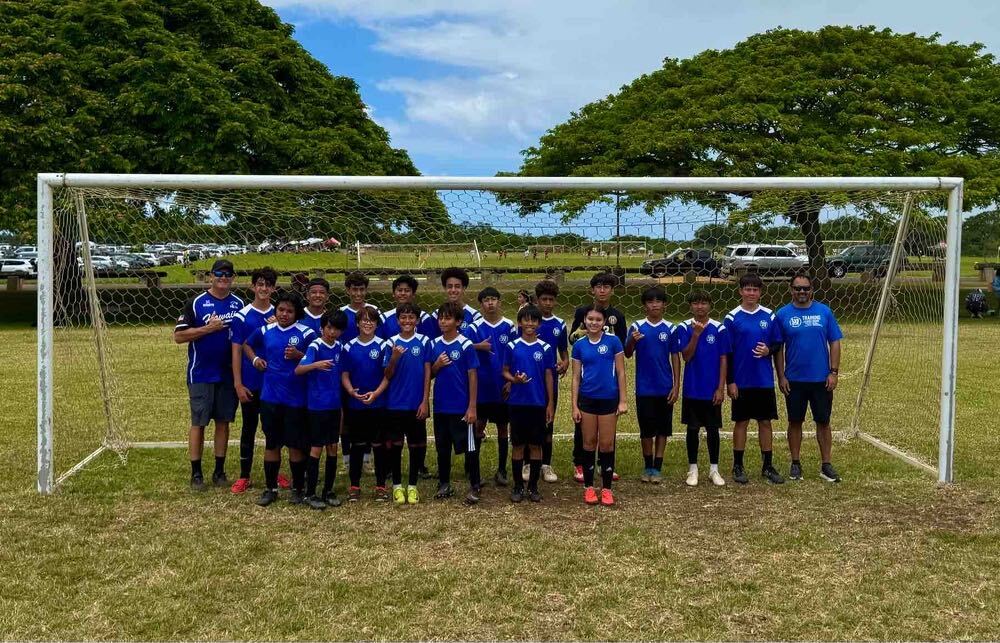
Last season's team, AYSO Region 269.
Last season's team. AYSO Region 269.

Who I Am

I am Coach Brandon. I coach youth soccer with AYSO Region 269 in Leeward, Area 7E. I am newer to coaching, but I take the role seriously and I prepare for it like it matters, because it does. I work with kids across age groups, from the youngest divisions on up, and I shape what we do around where they actually are.

This page is here so families know exactly what they are signing up for before the first whistle. No surprises about how I run a practice, how I handle game day, or what I expect from the people on both sides of the sideline.

Develop the player first, then the team. Confidence is built, not given.
The approach

What I Believe

The principles that guide how I run a team.

  1. 01

    Master the basics first

    Before tactics, before formations, players need a first touch, a passing foot, and the ability to dribble out of trouble. We spend real time on the fundamentals because everything else gets built on top of them.

  2. 02

    Confidence is built, not given

    You cannot tell a kid to be confident. They earn it through reps, through small wins, and through being trusted to make plays. My job is to create the situations where that confidence can grow.

  3. 03

    Mistakes are part of learning

    If a player is trying a move, trying a pass, trying to read the game, they will fail sometimes. That is not the problem. The problem is being so afraid of mistakes that you stop trying. We do not yell at kids for trying.

  4. 04

    Effort over outcome

    I do not measure a season by the scoreboard. I measure it by who is working, who is paying attention, who is competing for the ball. Effort is the one thing every player can give every time, and it is what I reward.

  5. 05

    Train them to think, not just follow

    Soccer is a decision making game. The best players see the field, read the play, and choose. I coach in a way that asks players to make those choices, not just run a script.

  6. 06

    Respect is non-negotiable

    Respect for teammates, opponents, referees, and parents is required. No trash talk, no arguing calls, no blaming a teammate for a mistake. Character is part of the program, not a side note.

How I Coach

Training

Touches, decisions, then play

Every practice has a purpose. We open with technical work and ball mastery so players get hundreds of touches before we do anything else. From there we move into small sided games, 1v1, 2v2, 3v3, where the touches and the decisions come fast. We finish with a scrimmage so kids leave having played the actual game.

Game day

Quiet bench, loud players

On the sideline I stay quiet and let them play. I will give a short cue when it really helps, but I am not calling the game from the bench. Players need room to make their own decisions, including the wrong ones. The real coaching happens at halftime and after the game.

Playing time

The floor, then earned minutes

Every player gets the AYSO minimum of two quarters. That is the floor, not the ceiling. Extra time is earned by what a player brings to the team: attendance, attitude, and drive. If you show up, work hard, and stay coachable, you get more of the game.

Conditioning

Built for 70 minutes

I believe in physical conditioning. Every practice has some form of it so players are ready for a full 70 minute match. We build it in alongside the ball work and the small sided games so kids show up on game day with the legs to last.

Player Development

At this age, wins and losses do not tell the story. Progress shows up in different places. It is the kid who could not dribble in week one trying it in week eight. It is the player who used to hide on the field starting to call for the ball.

Every kid is on their own timeline. Comparing your child to the best player on the team is not the right measure. The honest measure is who they are this season compared to who they were last season.

The long term goal is bigger than any one game. I want players who still love the game at sixteen, not players who burned out and walked away at twelve. Soccer can teach discipline, resilience, and how to handle failure, and those lessons stay with a kid long after the season ends.
What I Expect

Three sides of the same agreement. Clear expectations make for a better season for everyone.

From players

  • Show up on time, ready to work. Gear ready, water bottle full, head in the right place.
  • Give honest effort every session. I do not care if you are the best player on the field. I care that you are trying.
  • Respect teammates, opponents, coaches, and referees. Always.
  • Be coachable. Listen, try, ask questions. It is okay to not know. It is not okay to refuse to learn.

From parents

  • Cheer your player, but do not coach from the sideline. In game instructions from parents confuse the kids and pull against what we are teaching.
  • Let the referees do their job. Most of them are volunteers, often other parents, and they are doing the best they can.
  • Bring concerns to me directly. Text, email, or talk to me after a session. Do not air them on the sideline or in front of the team.
  • Get your player to practice and games consistently. Development needs reps. If they cannot make it, just let me know.

From me

  • I will be prepared and on time. Practices planned with purpose, on the field early.
  • I will treat every kid fairly and work on developing every player on the roster, not only the most talented.
  • I will be honest and direct with my feedback. You will not be surprised by what I am thinking, and neither will your player.
  • I will keep my decisions about the kids and the program, not the scoreboard.

Parent Volunteer Roles

The team only runs because parents step up. Two roles I need help filling every season. If either fits you, let me know through the form below.

Volunteer role

Sideline referee

Run the line during our games, signal when the ball goes out, and help the center referee keep the game moving. No experience required, just a willingness to be on the field and learn the basics.

Volunteer for this

Volunteer role

Snack coordinator

One parent runs the snack rotation for the season. Set the schedule, remind the family who is up that week, and make sure every game has a snack and drinks waiting at the end. Light commitment, big help to everyone.

Volunteer for this

Get In Touch

Questions about the team, the season, or anything you read on this page? Send a message and I will get back to you.

Coach

Coach Brandon

AYSO Region 269

Leeward, Area 7E